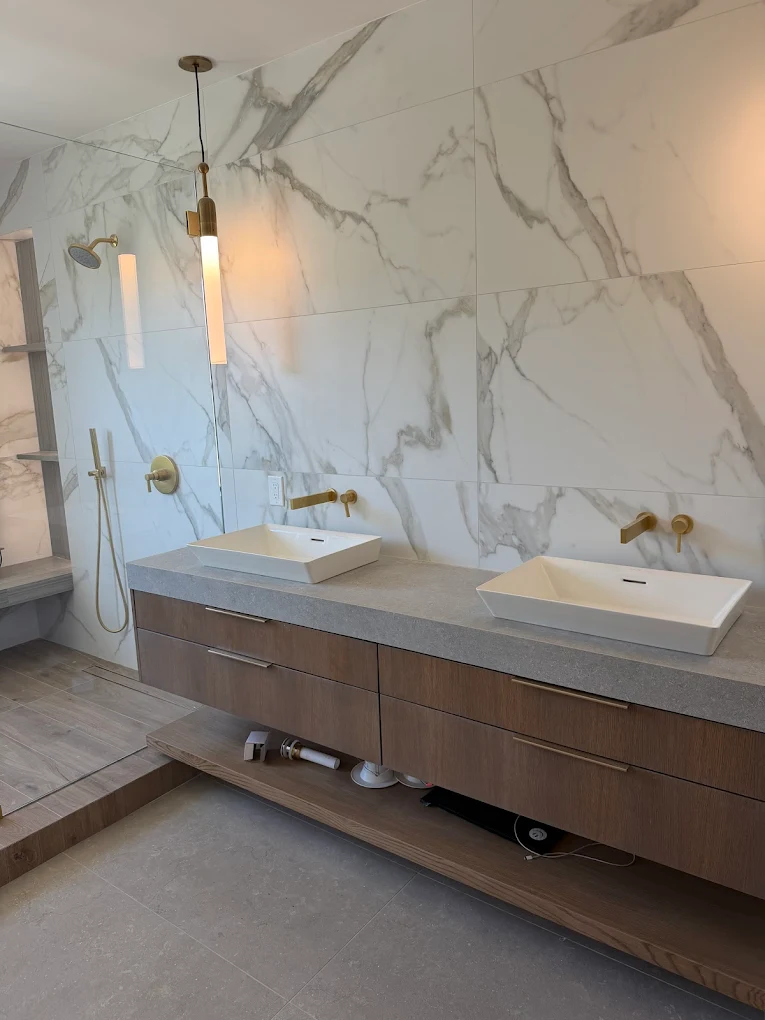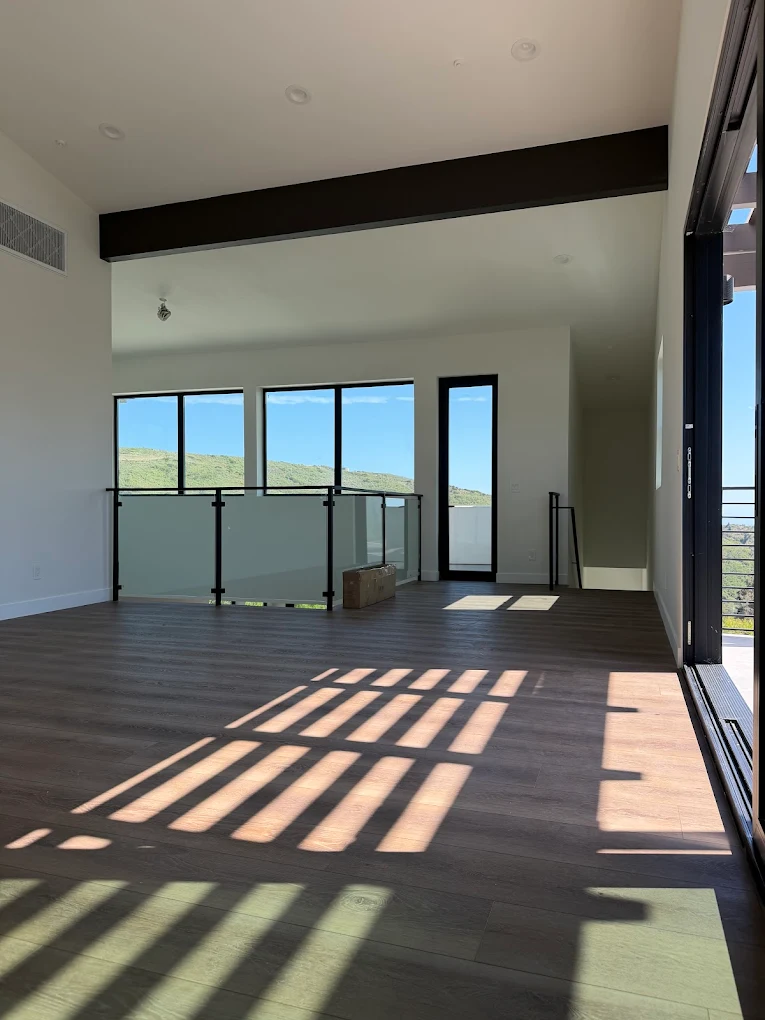


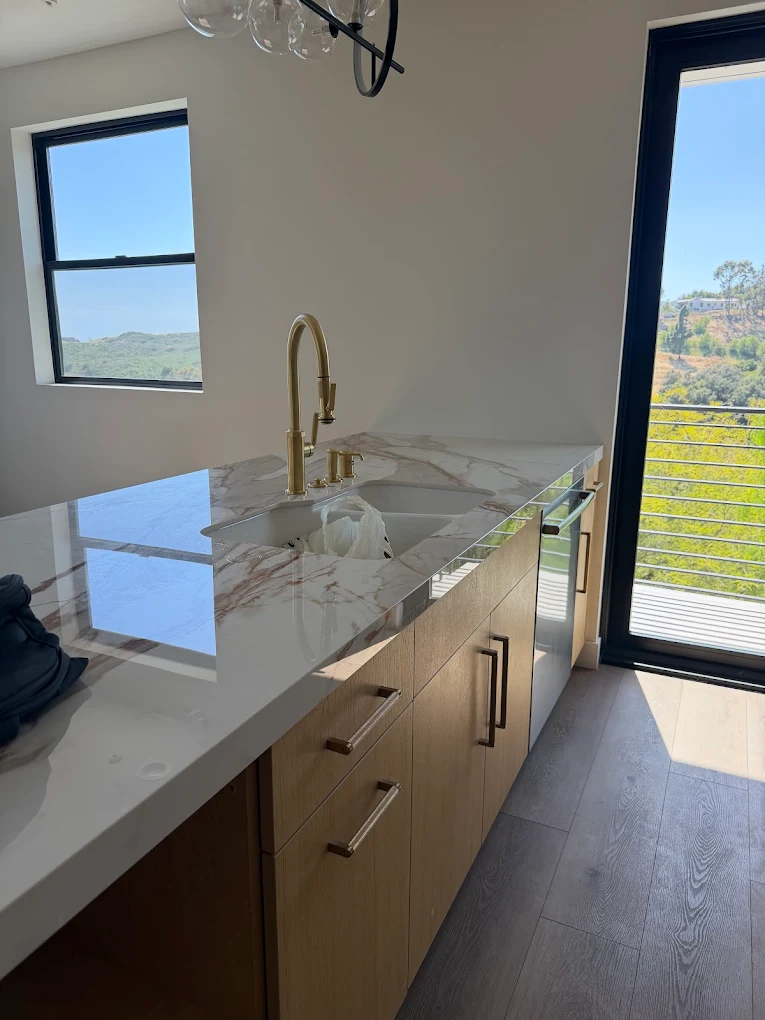
Kitchen remodeling is one of the most rewarding investments a homeowner can make, especially in Ventura County and Santa Barbara County where home values reflect the quality of finishes and the functionality of the floor plan. But the path from an outdated kitchen to a showpiece involves far more than picking quartz and cabinet colors. In our experience, homeowners who understand the real costs, timelines, and regulatory requirements before demolition begins are the ones who end up with kitchens they love without the stress.
We have managed kitchen remodels in Oxnard, Camarillo, Thousand Oaks, Westlake Village, Santa Barbara, Montecito, Goleta, and Carpinteria. Each city has its own permit office, its own inspection culture, and its own set of expectations around construction. Here is what we have learned from doing this work across the Central and South Coasts.
Kitchen Remodeling Costs in Ventura County and Santa Barbara County (2026)
Kitchen remodel costs in 2026 continue to be influenced by material pricing, labor availability, and the specific requirements of California's building code. For homeowners in Ventura County and Santa Barbara County, the range typically falls between $45,000 and $120,000 for a full remodel, depending on the scope and quality of finishes.
We tell homeowners to think in three tiers rather than one number, because the difference between a refresh and a full renovation is substantial.
Budget Ranges by Scope — Minor Refresh vs Full Renovation
A minor refresh typically runs $15,000 to $30,000. This includes painting cabinets or replacing doors, swapping countertops with prefabricated material, updating the backsplash, and installing new hardware and lighting. No structural changes, no plumbing relocation, no new appliances requiring custom paneling. We have done these in Oxnard and Camarillo for homeowners who plan to sell within two years and need a return on investment without a long construction timeline.
A mid-range remodel runs $45,000 to $75,000. This replaces cabinetry with semi-custom boxes, installs quartz or granite slab countertops, upgrades appliances, retiles the backsplash, replaces flooring, and updates lighting and plumbing fixtures. This is the most common scope we see in Thousand Oaks and Westlake Village, where homeowners plan to stay for five to ten years and want a kitchen that feels new without overbuilding for the neighborhood.
A full luxury renovation runs $80,000 to $120,000 or more. This includes custom cabinetry, natural stone countertops, premium appliance packages, structural changes like wall removal or island installation, plumbing relocation, new lighting schemes, and sometimes integration with adjacent living spaces. We see this most frequently in Montecito and Santa Barbara proper, where older Spanish and Mediterranean homes require careful matching of new work to historic character.
Layout Changes That Add the Most Value to Southern California Homes
In our experience, the single highest-return change in any kitchen remodel is improving the connection between the kitchen and the living or dining area. Southern California homes, particularly those built before 1990, often have closed-off kitchens with a wall separating the cook from the rest of the household. Removing that wall and installing a beam or header opens the space, improves natural light, and creates the open-concept layout that buyers in this market expect.
We recently completed a kitchen remodel in a 1970s Carpinteria home where removing a load-bearing wall between the kitchen and family room transformed the entire first floor. The homeowners gained an island with seating, better sight lines to the backyard, and a kitchen that finally felt part of the house instead of hidden behind it.
Other high-value layout changes include relocating the sink to face the room instead of a wall, adding a prep island where none existed, and creating a dedicated pantry area. In California's coastal market, where square footage commands a premium, using every inch of kitchen space efficiently is critical.
Cabinet, Countertop, and Appliance Decisions That Affect Your Timeline
Material selection is where most kitchen remodel timelines get stretched. Homeowners often do not realize that the choices they make in the first two weeks of planning determine whether their project finishes on time or runs weeks late.
Custom cabinetry built by a local mill shop typically requires eight to twelve weeks from templating to installation. Semi-custom cabinets from major manufacturers can be ordered in four to six weeks, but the selection of finishes and configurations may be limited. Stock cabinets from a local supplier can arrive in two to three weeks, though the sizing options are fixed. We advise homeowners in Ventura County and Santa Barbara County to make cabinet decisions before any other finish selection, because cabinets drive the schedule more than anything else.
Quartz countertops are the most popular choice in our service area, and for good reason. They are durable, nonporous, and available in a wide range of colors. But they still require templating and fabrication, which adds seven to ten days after the cabinets are installed. Natural stone like marble or granite adds another week for slab selection and bookmatching. We tell homeowners to budget two weeks for countertops regardless of material.
Appliances have become the wild card in kitchen remodel timelines. In 2025 and 2026, we have seen lead times of four to sixteen weeks for certain European ranges, panel-ready refrigerators, and specialty dishwashers. We strongly recommend ordering appliances the day construction is approved, even if the kitchen will not be ready for them for two months.
Lead Time Realities in the Current Market
Custom range hoods: 6 to 10 weeks. Panel-ready refrigerators: 8 to 14 weeks. Specialty faucets and pot fillers: 2 to 6 weeks. Backordered tile: impossible to predict. We maintain a running list of materials that have caused delays in our recent projects across Camarillo, Thousand Oaks, and Santa Barbara. The consistent pattern is that ordering early and confirming ship dates weekly prevents most timeline surprises.
California Title 24 Energy Requirements for Kitchen Remodels
California's Title 24 energy code applies to kitchen remodels that involve electrical, lighting, or mechanical work, which is virtually every kitchen remodel we perform. The California Energy Code requires that all permanently installed lighting in kitchens meet high-efficacy standards, meaning LED or equivalent fixtures. Recessed cans must be rated for IC (insulation contact) and air-tight, with integrated LED trim or GU10 bulbs that meet the efficacy requirement.
If the remodel involves moving or adding electrical circuits, the kitchen must comply with the current version of Title 24, which in 2026 means meeting the 2025 energy code update. This affects lighting controls, demand response readiness for certain appliances, and in some cases, the electrical panel capacity. We coordinate with a California-licensed electrical engineer on every project that involves significant electrical changes.
Ventilation is another area where California code is stricter than national standards. Range hoods must be ducted to the exterior, with minimum exhaust rates based on the cooktop size. Recirculating hoods are not compliant for most kitchen remodels in our service area. We have had to upgrade ductwork in several Santa Barbara and Goleta homes where the existing hood was recirculating.
Each city handles Title 24 compliance differently during permit review. The City of Ventura requires energy calculations as part of the permit application. The County of Santa Barbara expects compliance documentation at the plan check stage. Camarillo and Thousand Oaks have their own building departments with specific submittal requirements. As a licensed California contractor, we manage these requirements as part of our standard process.
Working With a General Contractor vs Individual Trades
In theory, a homeowner could hire a cabinet installer, a countertop fabricator, a plumber, an electrician, a tile setter, and a painter separately to remodel a kitchen. We have seen homeowners attempt this in Oxnard and Camarillo. In almost every case, the result was a longer timeline, coordination gaps, and finger-pointing when something went wrong.
A general contractor does not just manage the schedule. We are responsible for the sequence. Cabinets cannot be installed until the electrical rough-in is inspected and the drywall is finished. Countertops cannot be templated until the cabinets are set and level. Backsplash cannot be installed until the countertops are in. Appliances cannot be delivered until the final electrical and plumbing connections are made. Each step depends on the one before it, and a general contractor keeps those dependencies moving without gaps.
We also carry the liability insurance and workers' compensation coverage that individual trades often do not. When a homeowner hires trades directly, they assume the risk of injury, property damage, or defective work. With a licensed general contractor, the homeowner is protected by the contractor's bond, insurance, and California licensing requirements.
Kitchen Remodel Timeline: What to Expect Week by Week
Based on our experience managing kitchen remodels in Ventura County and Santa Barbara County, here is a realistic week-by-week timeline for a full kitchen renovation.
Weeks 1–2: Design and Permitting. Finalize cabinet layouts, countertop selection, appliance specifications, and finish selections. Submit permit application to the local building department. Order cabinets, countertops, and appliances. Lead times for cabinets begin now.
Weeks 3–4: Demolition and Prep. Protect adjacent areas, disconnect utilities, remove existing cabinets, countertops, flooring, and fixtures. Evaluate subfloor and wall conditions. Address any rot, pest damage, or structural issues discovered during demolition.
Weeks 5–6: Rough-In Work. Plumbing rough-in for sink, dishwasher, pot filler, and any relocated fixtures. Electrical rough-in for lighting, outlets, under-cabinet lighting, and appliance connections. Install ductwork for range hood if not existing. Pass rough-in inspections.
Weeks 7–8: Drywall and Prep. Patch and finish drywall. Prime and paint walls and ceiling. Install flooring if it does not run under cabinets. Prepare for cabinet delivery.
Weeks 9–11: Cabinetry and Countertops. Install base and wall cabinets. Verify level and alignment. Countertop templating after cabinets are set. Countertop fabrication and installation. Install sink and faucet.
Weeks 12–14: Backsplash, Appliances, and Finishes. Tile backsplash installation. Grout and seal. Appliance delivery and installation. Final electrical and plumbing connections. Install lighting fixtures and under-cabinet lighting. Final walkthrough and punch list.
Every project is different, but this sequence gives Ventura County and Santa Barbara County homeowners a realistic framework. We have seen projects finish in ten weeks and stretch to twenty, but the difference is almost always driven by material lead times and the complexity of structural work.
Why Local Experience Matters
Kitchen remodeling in Ventura County and Santa Barbara County is different from kitchen remodeling in other parts of California. Coastal homes have unique considerations: older construction methods, smaller lot sizes, historic preservation guidelines in certain neighborhoods, and permitting processes that vary from city to city.
We have pulled permits in Ventura, Oxnard, Camarillo, Thousand Oaks, Westlake Village, Santa Barbara, Montecito, Goleta, and Carpinteria. We know which jurisdictions require structural calculations for beam installations, which ones need energy compliance documentation at plan check, and which inspectors focus on specific details like range hood exhaust rates or electrical panel labeling.
Local experience also matters for subcontractor relationships. The tile installers, cabinet makers, countertop fabricators, and electricians we work with are based in Ventura County and Santa Barbara County. They know the local building departments, they understand the regional style preferences, and they have worked together on enough projects to coordinate efficiently without supervision on every detail.
If you are planning a kitchen remodel in Ventura County or Santa Barbara County, we encourage you to talk to us before you make any final decisions on layout, materials, or budget. We can help you understand what is realistic for your home, what your local building department will require, and how to sequence your project for the best result. Contact EG Construction to start the conversation.