
Adding a room to your home is one of the most practical ways to gain the space your family needs without packing up and moving to a new house. But a room addition is also one of the most technically complex projects a homeowner can take on. It involves foundation work, structural connections, roofing tie-ins, siding transitions, window alignment, mechanical extensions, and finish matching all while keeping your existing home intact and livable.
EG Construction has built room additions across Santa Barbara County, Ventura County, and Los Angeles County for homeowners who want more space but do not want to leave their neighborhood, their lot, or their home. From primary suites in Montecito to kitchen expansions in Thousand Oaks and second-story additions in Pacific Palisades, we have seen what works and what does not when connecting new square footage to an existing structure.
This guide walks through the major decisions, structural considerations, permitting requirements, budget ranges, and contractor qualifications you need to understand before starting a room addition in Southern California.
Types of Room Additions We Build Across Southern California
No two additions are exactly alike, but most projects fall into a few common categories. The type of addition that fits your home depends on your lot, your existing floor plan, your budget, and the specific problem you are trying to solve.
Primary suite additions remain one of our most requested projects across all three counties. Homeowners in older Santa Barbara homes, mid-century Ventura tract houses, and California ranch-style properties in Calabasas often find that the existing primary bedroom is too small, lacks a walk-in closet, or has an undersized bathroom. A primary suite addition allows you to build a proper master retreat with a spacious bedroom, large closet, and en-suite bathroom designed to your specifications.
Kitchen expansions and bump-outs are common in Camarillo, Oxnard, and Westlake Village, where many homes were built with galley kitchens that do not connect well to the dining or family room. By extending the exterior wall a few feet, we can create room for an island, better storage, and a more open layout.
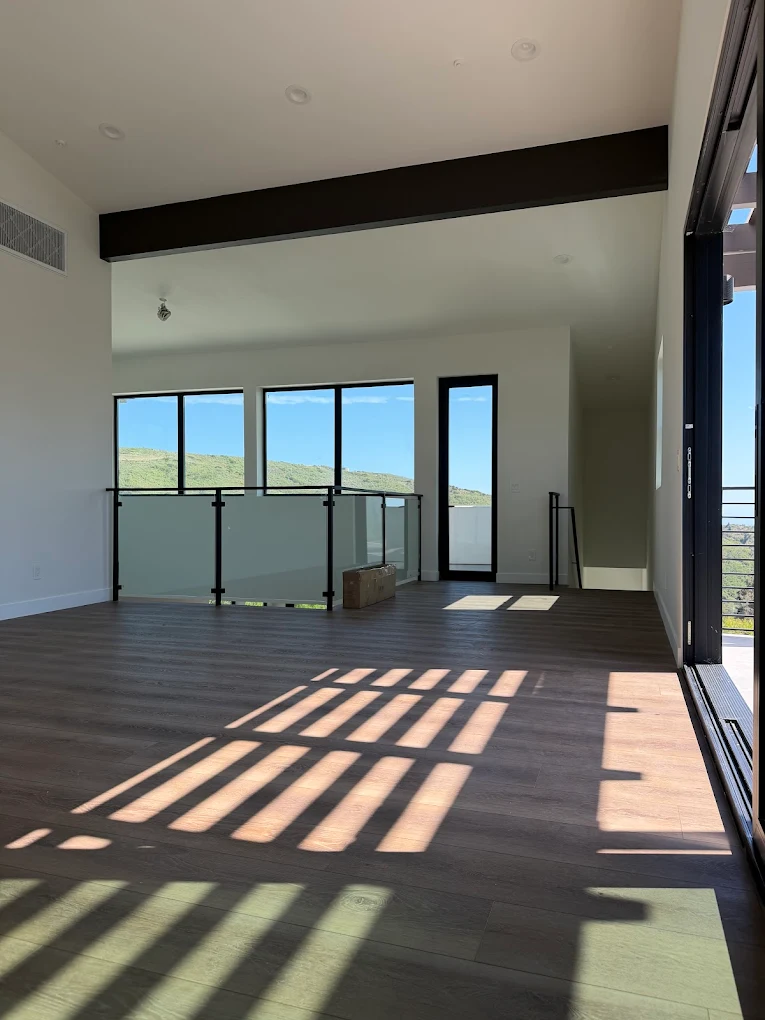
Family room and great room additions are popular in Goleta and Carpinteria, where homeowners want a dedicated gathering space that opens to the backyard or connects to an existing kitchen. These additions often include vaulted ceilings, large windows or sliding doors, and direct access to outdoor living areas.
Second-story additions are one of the most complex projects we undertake. Adding a floor above an existing single-story home requires structural analysis of the existing foundation and framing, often involving foundation reinforcement, new shear walls, and careful sequencing so the lower floor remains supported during construction.
Home office and guest suite additions have grown significantly in demand. Whether you need a quiet workspace where you can meet clients or a private suite for visiting family, these additions range from compact single-room spaces to full in-law quarters with a kitchenette and bathroom.
Matching Your Addition to the Existing Structure
The difference between an addition that looks like it belongs and one that looks tacked on comes down to how well the new construction integrates with the original house. Every addition we build requires careful attention to roof lines, foundation elevations, exterior materials, window styles, trim profiles, and interior finish transitions.
We start by documenting the existing structure. What is the roof pitch? What type of foundation does the home sit on? What is the exterior cladding? What window brand and profile was used? These details determine how the addition connects visually and structurally.
Architectural Consistency in Coastal and Inland Homes
Santa Barbara County homes often feature Spanish Colonial, Mission Revival, or California Ranch architecture with low-pitch clay tile roofs and smooth stucco finishes. When we build an addition on a Montecito or Santa Barbara property, matching the stucco texture, roof tile profile, and architectural character is essential. A modern flat-roof addition would look wildly out of place on a traditional Spanish-style home.
In Ventura County, especially in Oxnard, Camarillo, and Thousand Oaks, the housing stock includes more mid-century ranch homes, split-levels, and suburban tract houses from the 1970s through the 2000s. The addition needs to match the era and style of the original home.
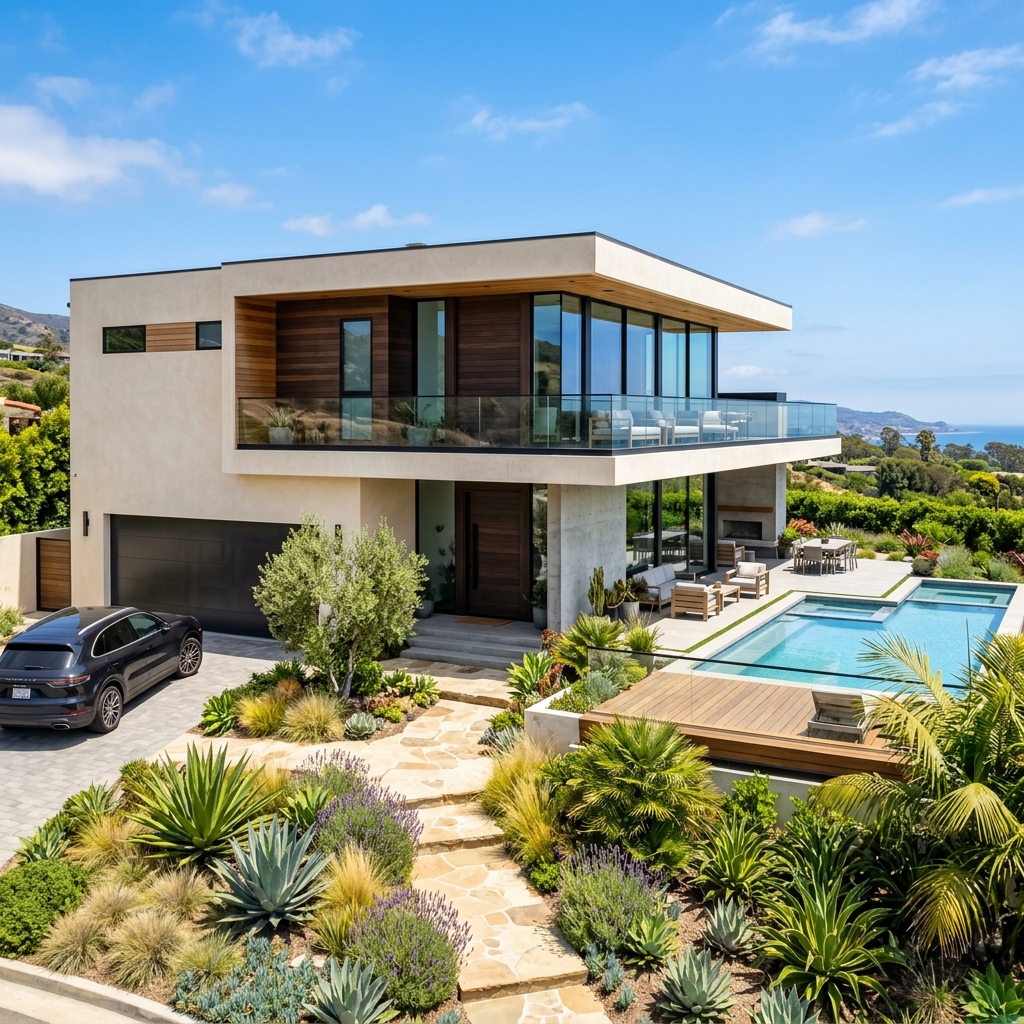
Los Angeles County properties in Malibu, Calabasas, and Pacific Palisades span every architectural style from mid-century modern to Mediterranean. In hillside communities, sloped lots require stepped foundations and multi-level designs — a different structural approach than a slab-on-grade addition in Westlake Village.
Foundation and Site Conditions in California
The foundation of your addition must support the new structure and connect properly to the existing home. In California, foundation design is governed by the California Building Code (CBC), which adopts the International Residential Code (IRC) with California-specific amendments for seismic, energy, and fire safety.
Slab-on-grade foundations are the most common for ground-floor additions on relatively flat lots. A concrete slab with integral footing is poured directly on prepared soil, with a vapor barrier, reinforcement steel, and edge thickening at load-bearing points.
Raised or crawlspace foundations are often used when the existing home sits on a raised foundation, when the addition is on a sloped lot, or when access to under-floor plumbing and electrical is needed.
Perimeter foundation with pier and grade-beam systems may be required on hillside properties in Malibu, Pacific Palisades, and parts of Santa Barbara County. These engineered foundations transfer loads to competent soil and are designed by a structural engineer based on geotechnical soil reports.
Seismic Considerations for Additions
California's seismic requirements affect every room addition we build. The 2022 California Building Code includes specific provisions for additions to existing structures, including requirements for continuous load paths, shear wall capacity, foundation anchorage, and roof-to-wall connections.
When we add square footage to an existing home, the new structure must be designed and built to resist seismic forces independently and in conjunction with the existing structure. The foundation of the addition must be connected to the existing foundation with dowels or mechanical ties. The roof and floor diaphragms must transfer lateral loads to the shear walls, which transfer loads to the foundation.
Title 24 energy requirements also apply to additions. When you add conditioned square footage to your home, the new space must meet current energy code standards for insulation, windows, doors, HVAC efficiency, and duct sealing.
Connecting HVAC, Electrical, and Plumbing
An addition may be new construction, but it has to connect to your existing home's mechanical systems. HVAC. Adding square footage increases the heating and cooling load. A room addition often requires extending ductwork, adding a new zone, or installing a mini-split system. In many older Santa Barbara and Ventura homes, the existing HVAC system is undersized even for the original square footage, and the addition forces a system upgrade.
Electrical. An addition needs outlets, switches, lighting circuits, and possibly dedicated circuits for appliances. The existing electrical panel must have capacity for the new circuits. If the panel is full or undersized — common in homes built before the 2000s — you may need a panel upgrade.
Plumbing. If your addition includes a bathroom, kitchenette, or laundry hookups, you need hot and cold water supply lines and waste drainage. We always verify the condition of existing plumbing before connecting new work, because old galvanized or cast-iron pipes may need replacement before a reliable connection can be made.
Permitting Room Additions in Santa Barbara, Ventura, and LA Counties
The permitting process typically involves plan preparation (architectural drawings, structural calculations, and Title 24 energy documentation), plan check by the building department (which can take 4 to 8+ weeks depending on jurisdiction), permit issuance, and inspections at key milestones.
Different jurisdictions have different requirements. Santa Barbara County and the City of Santa Barbara have specific design review requirements for properties in historic districts or coastal zones. Ventura County permits are typically handled through the Building and Safety Division with additional requirements for hillside development and fire safety. Los Angeles County includes strict hillside ordinances and fire code requirements for properties in Very High Fire Hazard Severity Zones.
EG Construction coordinates the permitting process as part of our service. We prepare the application, respond to plan check comments, schedule inspections, and ensure the work passes each inspection stage.
Room Addition Costs Per Square Foot (2026 Ranges)
Basic addition (unfinished shell or garage conversion): $200 to $350 per square foot. Standard finished addition (bedroom, office, family room): $350 to $500 per square foot. Premium addition (primary suite, kitchen expansion, addition with bathroom): $500 to $750 per square foot. Second-story addition or complex hillside project: $600 to $900+ per square foot.
These ranges are based on actual projects we have estimated and built across Santa Barbara County, Ventura County, and Los Angeles County. Your specific project may fall outside these ranges depending on site conditions, material selections, and the scope of utility upgrades required.
How to Choose a Room Addition Contractor
Choosing the right contractor for your room addition is as important as the design. Look for addition-specific experience, verify licensing and insurance (EG Construction is CSLB #1154478), check local permit experience with your specific jurisdiction, ask about their process for protecting the existing home during construction, and get a detailed written scope with a payment schedule and timeline.
Not every general contractor has experience matching roof lines, tying foundations to existing slabs, or managing the sequencing of an occupied home during construction. Ask specifically about their room addition experience and request examples of addition projects they have completed.
Start Planning Your Room Addition
If you are considering a room addition in Santa Barbara County, Ventura County, or Los Angeles County, the first step is understanding what is possible on your property. EG Construction can review your home, discuss the type of addition you are considering, and help you understand the feasibility, scope, structural requirements, utility needs, permitting path, and realistic budget before you make any commitments.
Explore our room addition services or contact EG Construction to schedule a consultation. Tell us about your home, the space you need, and where you want to build it. We will help you determine whether a room addition is the right solution and what it will take to make it happen.