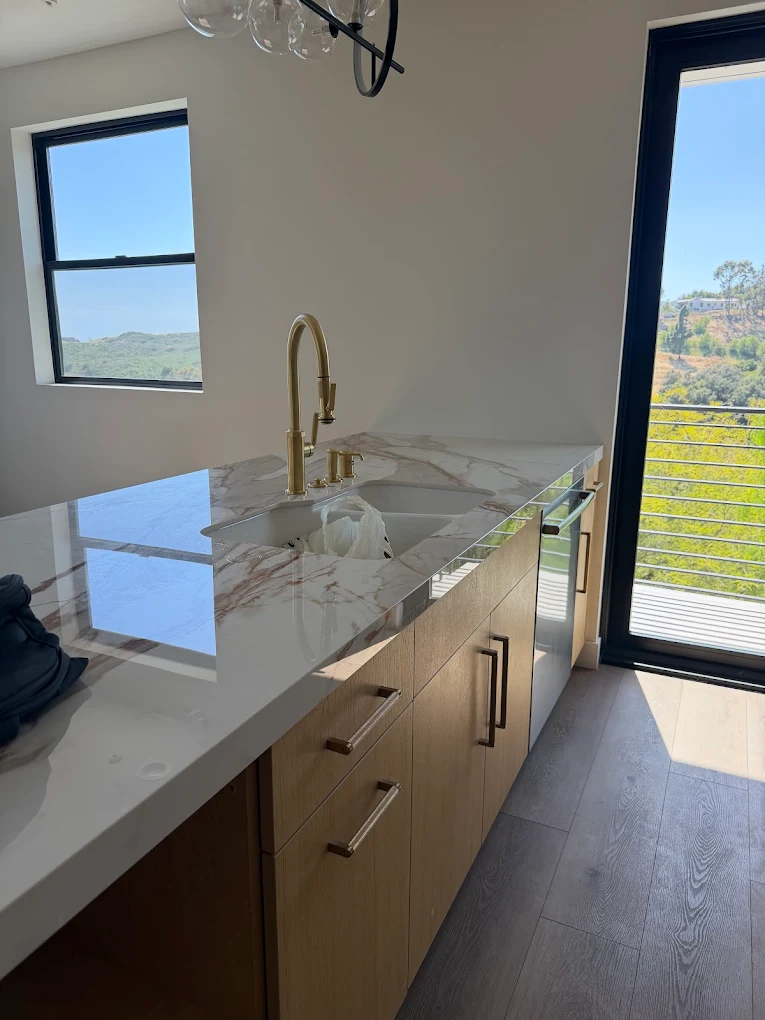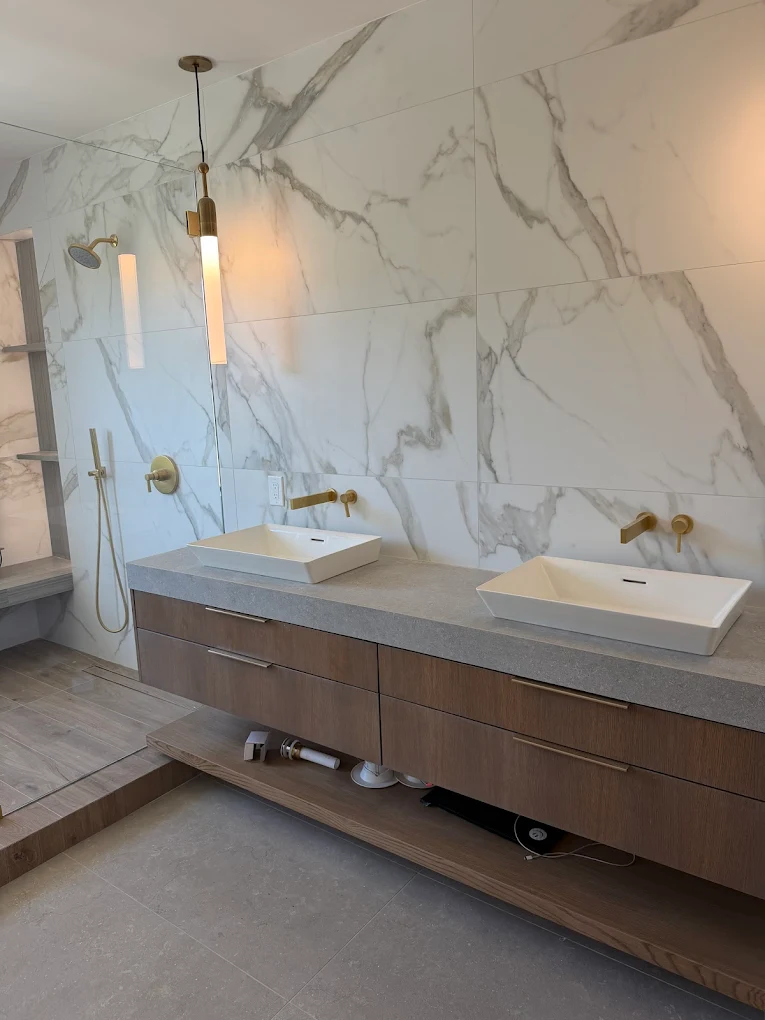


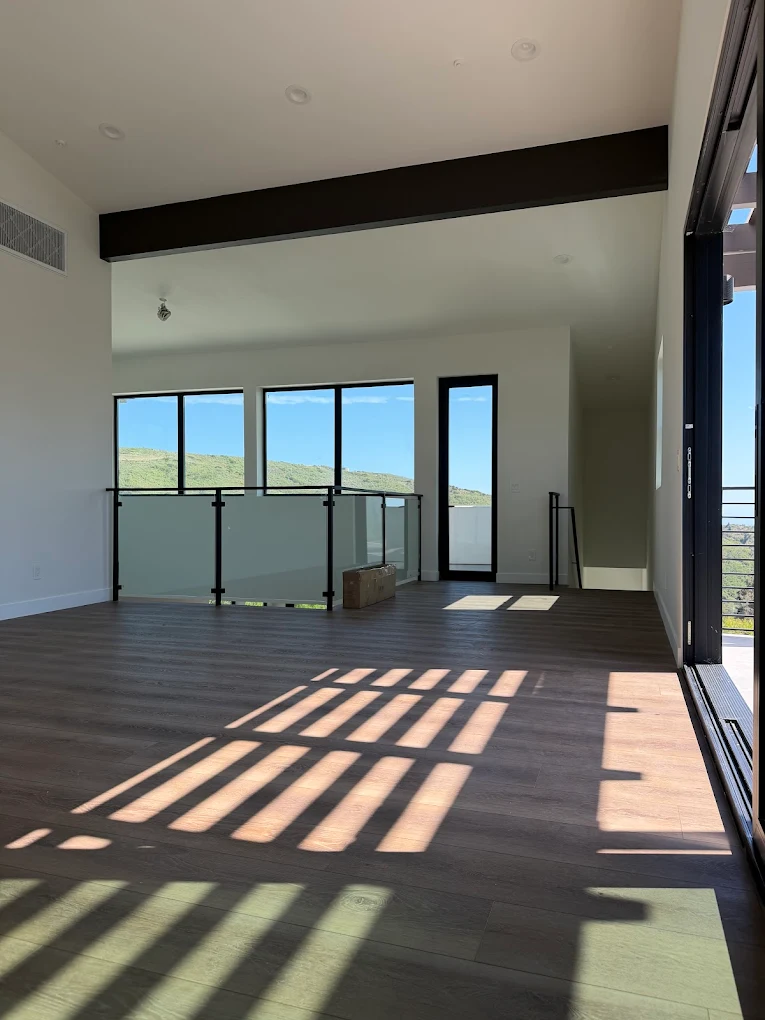
A whole home renovation is the most comprehensive type of residential remodeling project you can undertake. Unlike a kitchen refresh or a bathroom update, a whole home renovation touches every room, every system, and every surface. It rewires the electrical, reconfigures the plumbing, often re-frames walls, and completely transforms how you live in your home.
Over the past 15 years, EG Construction has managed dozens of whole home renovations across Santa Barbara County, Ventura County, and Los Angeles County. We have worked through the permit processes in Santa Barbara, Ventura, Oxnard, Camarillo, Thousand Oaks, and Westlake Village. We have retrofitted homes built in the 1920s in Montecito and reimagined mid-century ranches in Calabasas. The lessons we have learned on those jobs are what we share here.
In our experience, the difference between a renovation that finishes on time and on budget and one that spirals out of control comes down to what happens before the first wall is opened. This guide covers everything you need to plan for a whole home renovation in Southern California.
Why Whole Home Renovations Are Different from Piecemeal Remodeling
Many homeowners approach remodeling room by room. They do the kitchen one year, the master bath the next, and maybe a guest bathroom a few years later. Piecemeal remodeling works for smaller budgets, but it has real drawbacks. You end up living through construction multiple times. Your mechanical systems get patched rather than replaced holistically. And the design cohesion across your home suffers because each room was planned in isolation.
A whole home renovation solves all of those problems at once. We gut the interior down to the studs and rebuild with a unified vision. The electrical panel gets sized for the entire house. The HVAC system is designed to condition every room efficiently. Plumbing is modernized from the main line in. The result is a home that performs better, looks cohesive, and will not need major work again for decades.
We typically see that homeowners who choose a whole home renovation save 15 to 25 percent compared to doing the same scope of work piecemeal over several years, because we can bundle trades, order materials in bulk, and avoid the inefficiency of remobilizing a crew multiple times.
There is also the lifestyle advantage. When you renovate all at once, you have a defined period of disruption rather than years of intermittent construction. For families with young children or homeowners who work from home, this concentrated timeline is often the deciding factor.
Santa Barbara County and Ventura County Planning and Permit Requirements
Permitting is where many whole home renovation projects hit their first snag. California building codes are among the most stringent in the country, and local jurisdictions in our service area each have their own interpretation of those codes. We advise homeowners to budget for a permit and plan review timeline of 6 to 12 weeks before construction can begin.
Navigating Local Building Departments
Every city we work in has a slightly different process. Here is what we have learned from experience:
Santa Barbara. The City of Santa Barbara Building & Safety Division requires full plan sets including structural calculations, energy compliance (Title 24), and sometimes a Historical Landmarks Commission review if your home is in the Historic District. Montecito and Hope Ranch fall under Santa Barbara County permitting, which has its own set of zoning requirements including hillside development standards and oak tree protection ordinances. We have seen plan review take 8 to 12 weeks for a whole home renovation in Santa Barbara city limits.
Ventura. The City of Ventura Building & Safety Division is generally efficient but strict on energy code compliance. Ventura requires Title 24 energy reports, CF1R forms, and HERS verification for any project involving HVAC or envelope changes. We advise clients to have their energy consultant lined up before submitting for permit.
Oxnard. Oxnard's Building & Safety Department requires separate permits for mechanical, electrical, and plumbing work in addition to the building permit. The city has specific requirements for coastal zone properties, which we discuss below. Plan review typically takes 6 to 8 weeks.
Camarillo. Camarillo has a streamlined process for residential renovations but is strict about setback compliance and lot coverage. If your renovation increases the footprint of the home, you will need to verify that your lot coverage remains within city limits. Camarillo also requires fire sprinkler systems in certain circumstances under California Residential Code Section R313.
Thousand Oaks and Westlake Village. These cities require TRPA (Thousand Oaks Planning Department) review for any exterior changes. Even if your renovation is primarily interior, if you are changing windows, siding, or roof lines, you need an Architectural Review application in addition to the building permit.
We handle all of these processes for our clients. Our project management team prepares the submittal packages, coordinates with engineers and energy consultants, and follows up with plan checkers weekly to keep the process moving.
Seismic Considerations for Full Home Remodels in California
California is earthquake country, and a whole home renovation is the ideal time to address seismic vulnerabilities. We typically see that homes built before 1980 lack adequate shear walls, continuous load paths, and foundation anchoring. Older homes in Santa Barbara, Ventura, and Los Angeles counties were built to earlier codes that did not account for the seismic forces we now understand.
When we open up walls for a whole home renovation, we have the opportunity to install structural plywood shear walls, add hold-downs and tie-downs, retrofit the foundation with expansion anchors, and ensure that the roof-to-wall connections are adequate. This work is much more expensive to do later as a standalone project.
In Santa Barbara, many homes in the Riviera and Mission Canyon areas are on hillsides with crawlspace foundations. These homes often need cripple wall bracing and foundation bolting. The City of Santa Barbara has specific requirements for seismic retrofitting when a renovation exceeds 50 percent of the home's value, which triggers a full structural upgrade under the California Existing Building Code.
In Ventura County, the 1994 Northridge earthquake caused significant damage to unreinforced masonry and soft-story structures. Homes in Ventura, Oxnard, and Camarillo built before 1978 are prime candidates for seismic retrofitting during a whole home renovation. We advise homeowners to budget $15,000 to $40,000 for seismic work depending on the size and configuration of the home.
The good news is that California's Earthquake Brace + Bolt program and the California Residential Mitigation Program offer grants of up to $3,000 for qualifying homeowners who retrofit their foundations. We help our clients apply for these programs when they are eligible.
Budgeting for a Whole Home Renovation in 2026
Budgeting for a whole home renovation in 2026 requires a realistic understanding of current material costs, labor rates, and regulatory requirements. In our experience, the single biggest budgeting mistake homeowners make is underestimating the cost of structural and MEP (mechanical, electrical, plumbing) work.
We build a 15 to 20 percent contingency into every whole home renovation budget we prepare. That contingency covers the surprises that inevitably appear when walls are opened: corroded drain lines, outdated knob-and-tube wiring, dry rot in framing, or foundation cracks that were hidden behind finishes.
Typical Cost Ranges by County
Costs vary significantly across our service area. Here are the ranges we typically see for a whole home renovation in 2026, based on a 2,000 to 2,500 square foot single-family home:
Santa Barbara County. $300 to $450 per square foot. Santa Barbara and Montecito are the most expensive due to higher labor costs, limited trades availability, and stricter permit requirements. We recently completed a 2,400-square-foot whole home renovation in Montecito for $920,000, which included a full seismic retrofit, all new MEP, and custom millwork throughout.
Ventura County. $250 to $375 per square foot. Ventura, Oxnard, and Camarillo tend to be more affordable than Santa Barbara, though Thousand Oaks and Westlake Village are on the higher end of this range due to the TRPA review process and higher property values.
Los Angeles County. $275 to $425 per square foot. Malibu and Pacific Palisades are at the top of this range due to coastal regulations and premium materials. Calabasas and Woodland Hills are more moderate.
These are general ranges. The final cost depends on the quality of finishes, the complexity of the structural work, whether you are reconfiguring the floor plan, and the accessibility of the site. We provide detailed line-item estimates for every project before we begin.
How to Choose a General Contractor for Your Whole Home Renovation
Your general contractor is the single most important partner in your whole home renovation. A good contractor brings design input, trade relationships, scheduling expertise, and problem-solving ability. A bad one can turn your dream renovation into a two-year nightmare.
We advise homeowners to look for these signals when vetting contractors:
California CSLB license verification. Always verify that the contractor holds a valid California contractor license. EG Construction is CSLB #1154478. You can check any license on the CSLB website. Do not work with an unlicensed contractor, no matter how good their references sound.
Experience with whole home renovations specifically. Many contractors specialize in new construction or smaller remodels. A whole home renovation is a different animal. It requires sequencing dozens of trades, managing inspections across multiple disciplines, and coordinating material deliveries for every room simultaneously.
Knowledge of local permitting. As we discussed above, each city has its own process. Your contractor should have relationships with the plan checkers and inspectors in your jurisdiction. We have worked with the Building & Safety departments in Santa Barbara, Ventura, Oxnard, Camarillo, Thousand Oaks, and Los Angeles for years, and that familiarity speeds up the process.
Transparent pricing and contracts. We provide fixed-price contracts with clear scope of work, allowances for finish materials, and a schedule of values. If a contractor gives you a one-page estimate, that is a red flag.
Recent portfolio work. Ask to see recent whole home renovation projects, not just kitchen and bathroom remodels. Visit our whole home renovations portfolio to see examples of our work.
Timeline Expectations: From Design to Move-In
A whole home renovation is a marathon, not a sprint. Here is the realistic timeline we share with every client before we start:
Design and engineering (4 to 12 weeks). Working with your architect or our in-house design team to develop plans, structural engineering, Title 24 energy calculations, and specifications. The timeline depends on how much the scope changes from the existing layout.
Permit submittal and approval (6 to 12 weeks). As discussed above, this varies by jurisdiction. We submit complete plan sets to minimize correction cycles.
Demolition and rough-in (4 to 8 weeks). Gutting the interior, installing new MEP rough-ins, structural upgrades, and framing. This is the most disruptive phase and the one where surprises are most likely to appear.
Insulation, drywall, and finishes (8 to 16 weeks). Once the rough-in passes inspection, insulation goes in, drywall is hung and finished, and the home starts to look like a house again. Finish carpentry, flooring, tile, paint, cabinets, and countertops follow in sequence.
Final finishes and punch list (4 to 8 weeks). Trim, hardware, lighting, plumbing fixtures, appliance installation, and final touches. We walk every room with our clients before we call the project complete.
Total timeline. 6 to 12 months from design start to move-in for a typical whole home renovation. Complex projects with extensive structural work, coastal zone permitting, or custom millwork can take 12 to 18 months.
Experience Signals from EG Construction's Portfolio
Experience matters in whole home renovation. We have completed whole home renovations in Montecito, Santa Barbara, Goleta, Carpinteria, Ventura, Oxnard, Camarillo, Thousand Oaks, Westlake Village, Malibu, Calabasas, and Pacific Palisades. Each project taught us something about the unique conditions of that location.
In Montecito, we learned to work with the County of Santa Barbara's strict hillside development standards and their requirements for fire-hardened construction in Very High Fire Hazard Severity Zones. We use ember-resistant vents, Class A roofing materials, and noncombustible exterior siding on every project in those zones.
In Ventura and Oxnard, we navigate coastal zone regulations under the California Coastal Act. Any renovation within the coastal zone requires a Coastal Development Permit in addition to the building permit, and the timeline for that can add 4 to 8 weeks to the schedule.
In Westlake Village and Thousand Oaks, we work with homeowners' associations and architectural committees to ensure the design meets community standards while still giving our clients the home they want.
Every whole home renovation we manage includes project management software with weekly updates, a dedicated point of contact, and a quality control walkthrough before final sign-off. We are proud of the homes we have built and the relationships we have developed with homeowners across all three counties.
If you are considering a whole home renovation in Santa Barbara County, Ventura County, or Los Angeles County, contact EG Construction. We will walk you through our process, show you examples of our work, and help you understand exactly what your project will involve.