
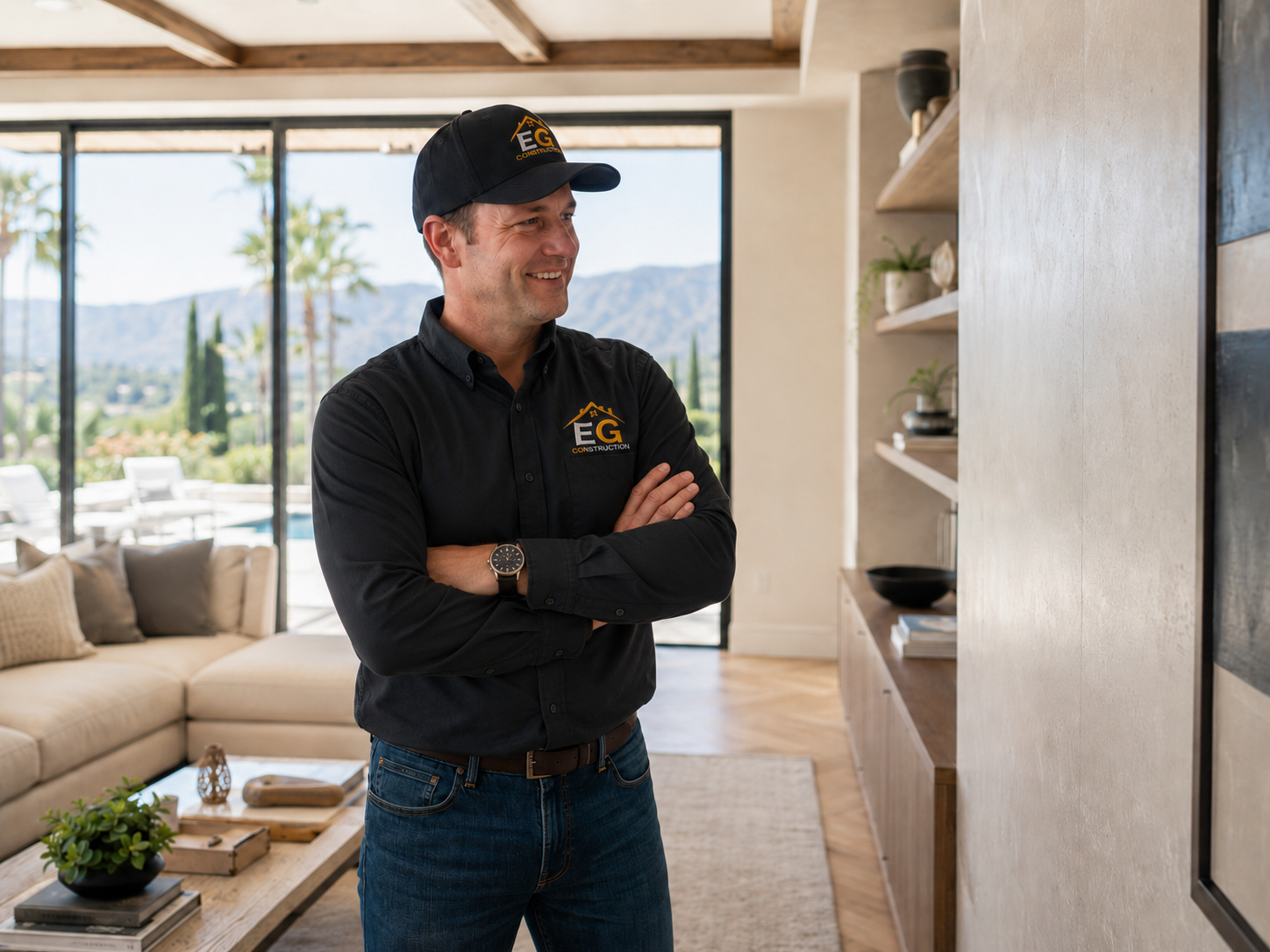
When homeowners in Ventura County, Santa Barbara County, and Los Angeles County think about improving their property, the exterior is where the biggest return on investment lives. Curb appeal matters whether you are preparing to sell or simply want to enjoy a home that looks as good as it performs. But in California, exterior remodeling is about more than aesthetics. The same upgrades that make your home beautiful also protect it from wildfire embers, coastal salt air, seismic movement, and the intense Southern California sun.
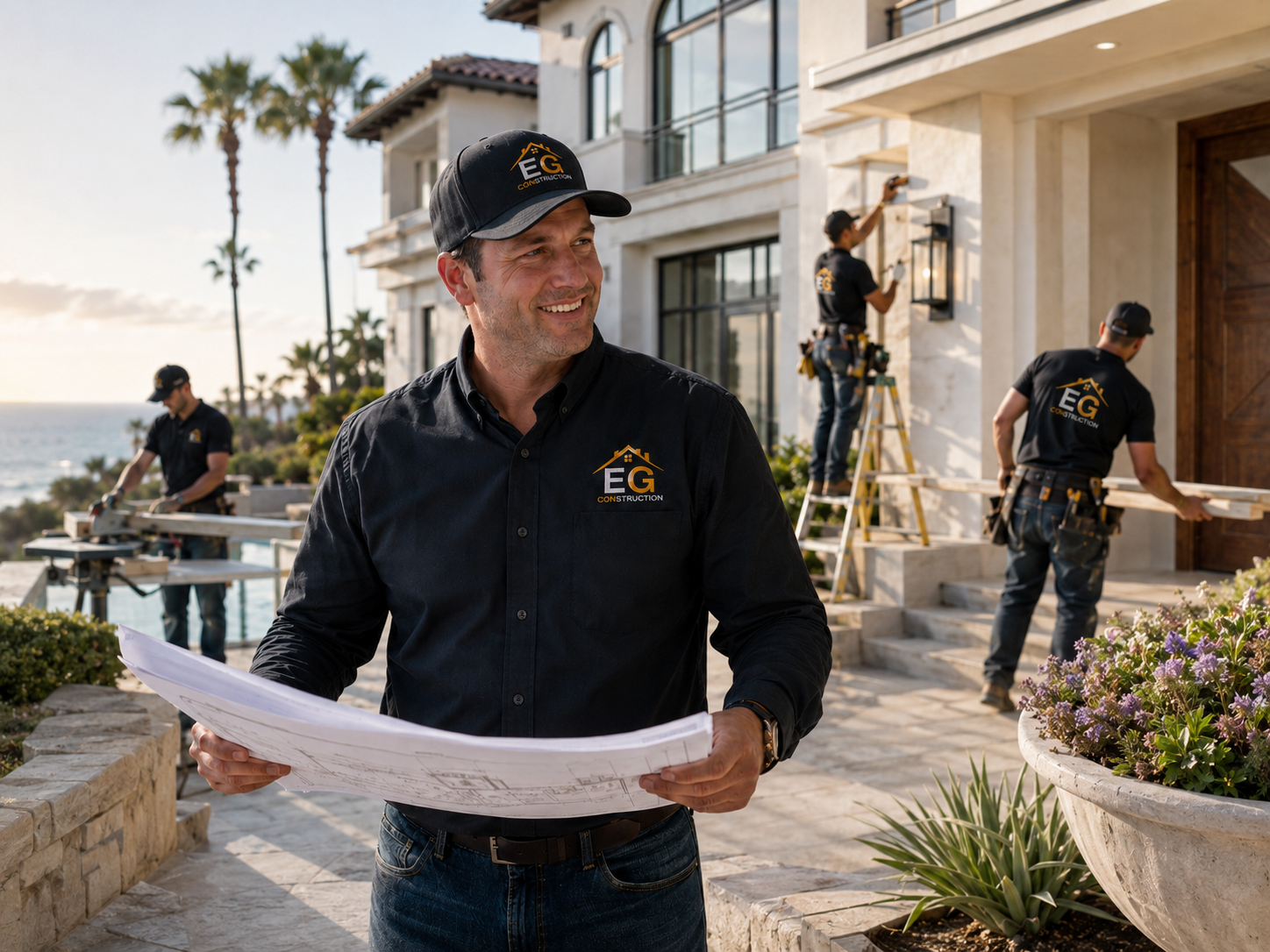
Over the years, EG Construction has completed exterior remodels in Montecito, Goleta, Carpinteria, Oxnard, Camarillo, Thousand Oaks, Westlake Village, Malibu, Calabasas, and Pacific Palisades. Every project has reinforced the same lesson: the best exterior remodel balances curb appeal with real, measurable protection. Here is what we have learned about getting that balance right.
Why Exterior Remodeling Matters in Southern California
Southern California homes face a unique combination of environmental stresses. Coastal communities like Malibu and Montecito deal with salt-laden air that accelerates corrosion on metal components and degrades paint finishes more quickly than inland climates. Inland areas such as Thousand Oaks and Camarillo experience hotter summer temperatures and colder winter nights, which cause building materials to expand and contract more dramatically. And across all three counties, wildfire risk is a year-round concern that influences material choices, building codes, and insurance requirements.
An exterior remodel is your opportunity to address all of these conditions at once. Replacing old siding with fire-resistant materials, installing energy-efficient windows, upgrading to a Class A fire-rated roof, and sealing the building envelope against moisture intrusion are investments that pay off every single day. They lower your energy bills, reduce maintenance, increase your home's resale value, and give you peace of mind during fire season.
The California Building Standards Code, specifically Title 24, sets strict requirements for energy efficiency, ventilation, and structural performance in exterior work. Local jurisdictions in Santa Barbara, Ventura, and Los Angeles counties may layer additional requirements on top of the state code, especially in high fire severity zones and Coastal Commission jurisdictions. An experienced contractor navigates these requirements so your project is both beautiful and fully compliant.
Siding Options for Coastal and Inland Homes
Siding is the largest visible surface of your home, and the choice you make affects everything from maintenance frequency to fire resistance to insulation value. In our service area, we see three siding materials used most often, each with distinct advantages depending on where the home is located.
Fiber Cement vs Engineered Wood vs Premium Vinyl
Fiber cement siding, manufactured by brands like James Hardie, is the most popular choice for exterior remodeling in Ventura County and Santa Barbara County, and for good reason. It is non-combustible, which matters in wildfire-prone areas from Montecito to Malibu. It resists moisture, does not warp in the sun, and holds paint exceptionally well. Fiber cement is heavier than other options and requires specialized tools for cutting and installation, but the durability payoff is significant. Homes in coastal areas benefit from fiber cement's resistance to salt air, while homes in inland areas appreciate its stability through temperature swings.
Engineered wood siding, such as LP SmartSide, offers the look of natural wood with better dimensional stability and rot resistance. It is treated with preservatives and binders that make it more durable than traditional wood siding, and it carries a Class A fire rating when properly installed over non-combustible sheathing. Engineered wood is lighter than fiber cement, which can reduce labor costs on multi-story homes. We have used engineered wood successfully on projects in Thousand Oaks and Westlake Village where homeowners wanted a natural wood aesthetic without the maintenance burden of real cedar.
Premium vinyl siding has improved significantly in recent years. Insulated vinyl panels offer better energy performance than older hollow vinyl, and fade-resistant pigments help maintain color in intense sun exposure. Vinyl is the most budget-friendly option and is virtually maintenance-free. However, it is not recommended for high fire severity zones, and in very hot inland climates, vinyl can soften or warp if not properly installed with adequate expansion gaps. We typically recommend vinyl for smaller accessory structures or for homeowners on a tighter budget who are not in high fire risk areas.
Energy-Efficient Windows and Doors for California Homes
Windows and doors are the weakest points in any home's thermal envelope. In older California homes, single-pane windows and uninsulated doors are common, and replacing them with modern energy-efficient assemblies is one of the most impactful upgrades you can make. Title 24's Energy Code requires that replacement windows and doors meet specific U-factor and Solar Heat Gain Coefficient ratings. For most of our service area, dual-pane low-E windows with argon gas fill are the standard. These windows reduce heat gain in summer, retain heat in winter, and protect interiors from UV fading.
Impact-resistant windows and doors are worth considering in coastal areas and wildfire zones. In Malibu and Pacific Palisades, we frequently install windows with laminated glass that meets both energy code requirements and enhanced impact resistance from windborne debris during fire events. Sliding glass doors, French doors, and entry doors should all be specified with thermally broken frames and weatherstripping that meets California's air leakage standards.
Door selection also affects security and curb appeal. Steel entry doors with foam insulation cores offer the best combination of security, energy efficiency, and fire resistance. Fiberglass doors offer similar performance with more design flexibility. We work with homeowners in Carpinteria and Goleta to select doors that match the architectural style of the home while meeting modern performance standards.
Roofing Considerations: Fire Ratings and Solar Readiness
Roofing is one of the most regulated components of any exterior remodel in California. Building codes require that roofing materials in high fire severity zones meet Class A fire ratings, which means the assembly resists severe flame exposure, heavy ember accumulation, and heat. Concrete tiles, clay tiles, standing seam metal, and some high-end synthetic slate materials all carry Class A ratings. Wood shakes and untreated cedar, once common in Santa Barbara County, are no longer compliant in most fire hazard severity zones.
Beyond fire safety, roofing choices affect energy efficiency and solar readiness. Cool roof coatings and light-colored roofing materials reflect more solar radiation, reducing attic temperatures and lowering cooling loads. If you are considering solar panels now or in the future, the roof structure must be designed to support the additional load, and the orientation of the roof plane should maximize sun exposure. Title 24's prescriptive solar photovoltaic requirements for new roofs mean that even on an exterior remodel, you should plan for future solar installation. We include solar-ready conduit and structural reinforcement in every re-roofing project we design.
In coastal areas like Oxnard and Ventura, standing seam metal roofing is an excellent choice because it sheds salt-laden air, lasts 50-plus years, and provides a natural mounting surface for solar panels without penetrations. In Mediterranean climate zones across Santa Barbara and Thousand Oaks, concrete and clay tiles offer longevity and a classic California aesthetic that complements stucco and stone exteriors.
Exterior Paint and Weatherproofing in Mediterranean Climate
The Southern California Mediterranean climate is forgiving in many ways, but it is hard on exterior paint. The combination of intense UV exposure, temperature swings, and occasional moisture from marine layers creates conditions that cause paint to fail prematurely if the right products and preparation methods are not used. We specify 100 percent acrylic latex paints with UV-resistant pigments and elastomeric properties that allow the coating to expand and contract with the substrate. In coastal areas within a few miles of the ocean, we add corrosion-inhibiting primers on metal surfaces and use paint formulations rated for coastal environments.
Surface preparation is where most paint failures originate. Power washing, scraping loose paint, priming bare wood or fiber cement, and caulking gaps around windows, doors, and trim must be done thoroughly before any paint is applied. In older homes in Montecito and Pacific Palisades, we often find multiple layers of old paint that need to be removed to create a sound base for new coatings. Lead-safe work practices are required for homes built before 1978, and we follow EPA RRP regulations on every pre-1978 exterior repaint.
Weatherproofing goes beyond paint. Flashing details at roof-to-wall intersections, window and door openings, and deck ledger connections are critical for keeping water out of the wall assembly. We apply fluid-applied air and water barriers behind siding in many of our exterior remodels, especially in homes where the original building paper has deteriorated. These barriers seal the sheathing and provide a secondary defense layer against moisture intrusion, extending the life of the entire wall system.
Masonry, Stone Veneer, and Hardscape
Masonry elements add texture, permanence, and visual weight to an exterior remodel. Stone veneer, brick accents, retaining walls, walkways, patios, and driveways should be coordinated with the home's siding, roofing, and paint colors to create a cohesive design. Natural stone veneer offers the most authentic look but requires skilled masons for installation and adds significant weight to the structure. Manufactured stone veneer is lighter, more affordable, and available in styles that closely mimic local California stone varieties.
Hardscape surfaces need to account for drainage and seismic movement. In Ventura County and Los Angeles County, paver driveways and walkways should be installed on a compacted base with proper edge restraints to prevent shifting during earthquakes. Concrete flatwork should include control joints at the correct spacing to manage cracking. Permeable pavers are increasingly popular in Santa Barbara County, where stormwater management regulations require new hardscape to reduce runoff. We have installed permeable paver systems on projects from Camarillo to Calabasas that meet local low-impact development standards while providing durable, attractive surfaces.
Permitting Exterior Work in Santa Barbara, Ventura, and LA Counties
Exterior remodeling projects almost always require building permits, and the requirements vary significantly across the three counties we serve. In Santa Barbara County, projects in the Coastal Zone require Coastal Development Permits in addition to standard building permits. The Montecito area has additional debris flow and hillside development regulations that affect grading, drainage, and foundation work. Ventura County requires permits for siding replacement, window replacement, re-roofing, and any structural modifications. The City of Thousand Oaks and City of Camarillo each have their own building departments with specific plan check requirements and inspection schedules.
Los Angeles County has the most complex permitting environment, with different requirements depending on whether the property is in unincorporated county territory or within city limits. Pacific Palisades and Calabasas each have their own planning departments, and projects in high fire severity zones require additional documentation, including defensible space plans and enhanced ignition-resistant construction details. Our team manages the entire permitting process, from application and plan check through final inspection, so our clients do not have to navigate the bureaucracy themselves.
Title 24 compliance is a factor in every permitted exterior remodel. Energy calculations must demonstrate that the building envelope meets or exceeds code requirements for insulation, air sealing, window performance, and mechanical ventilation. We work with energy consultants who prepare the Title 24 reports required for permit submission, and we coordinate with local building officials throughout the approval process to keep projects moving.
Cost Ranges for Exterior Remodeling Projects (2026)
Understanding what exterior remodeling costs in 2026 helps homeowners plan their projects realistically. Prices reflect current material costs, labor availability, and code requirements in California. Fiber cement siding installation ranges from $12 to $20 per square foot installed, depending on the complexity of the architecture and the number of stories. Engineered wood runs $10 to $16 per square foot, and premium vinyl ranges from $8 to $13 per square foot. Window replacement costs $800 to $2,500 per window installed, with impact-rated and custom shapes at the higher end. A new Class A fire-rated roof runs $18,000 to $40,000 for an average single-family home, with standing seam metal at the top of the range and concrete tile in the middle.
Exterior paint averages $5,000 to $12,000 for a typical two-story home, with the variation driven by surface condition, number of colors, and access difficulty. Masonry and stone veneer range from $15 to $35 per square foot installed. Hardscape projects, including driveways, walkways, and patios, vary widely based on materials and square footage. A comprehensive exterior remodel on a mid-sized home in our service area typically falls between $50,000 and $150,000, not including structural additions or major grading work.
EG Construction provides detailed estimates for exterior remodeling projects across Santa Barbara County, Ventura County, and Los Angeles County. Visit our exterior remodeling service page to learn more, or contact us to schedule a consultation at your home.